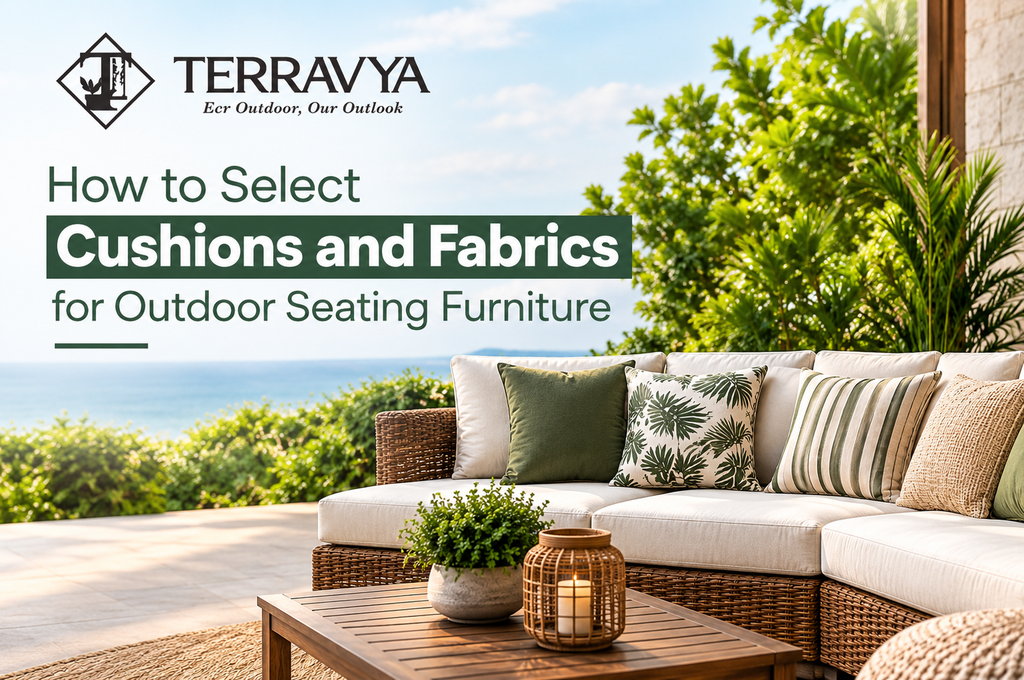
How to Select Cushions and Fabrics for Outdoor Seating Furniture
Most of the complaint we get about is the frame. It’s the smell. Someone buys a lounge set in March, is thrilled with it through the dry months, and then calls us in the second week of July asking why the cushion smells like a wet towel that’s been sitting in a cupboard. Nothing wrong with the frame. The fabric just held onto water it was never built to let go of.
That gap, how a cushion looks on the day you buy it versus what it’s doing after one proper Kolkata monsoon is basically what this whole piece is about. We build outdoor seating furniture for balconies and terraces at Terravya, and fabric is the question that comes up in almost every conversation with a buyer, usually right after they mention they’ve already replaced a cushion once. So this isn’t a list of nice-looking options. It’s closer to what we actually tell people before they buy, based on what tends to go wrong and roughly when.
Honestly, the Frame Was Never the Problem
People will spend two or three weeks comparing aluminium against wood against polypropylene, then choose the cushion in the last five minutes because it matches the floor tiles. That’s the wrong order to worry about things. An aluminium or PP frame, wiped down now and then, will outlast whatever’s sitting on it by years, in most parts of India. The cushion is the part that takes the actual beating — rain, dust, sunscreen marks, and, in at least two cases we’ve dealt with ourselves, a dog that decided the new lounge chair was its personal chew toy.
Pick the wrong fabric for your climate and it can look tired within one monsoon — flattened foam, colour gone dull, that faint mildew smell creeping in. Pick the right one and it can still look decent two or three years in. So no, the frame was never really the thing to obsess over.
The Fabrics, and What They’re Actually Made Of
Solution-dyed acrylic. This is what we use on most of our upholstered pieces, including the Open Air Luxe range, and honestly the reason has more to do with chemistry than looks. Ordinary dyeing sits colour on the outside of the fibre. Solution dyeing puts the colour into the fibre while it’s still liquid, before it even becomes thread — so the colour goes all the way through instead of just coating the surface. Sun wears away surface colour first. Now we can remove that separate extra layer from it which will result in the sun to trip off less than usual, this will make the fading slow down. It also helps in draining the water fast which is enough to not be sedimented for the breeding mildew the way cotton do with the water sitting down.
Polyester with a water-resistant coating. Cheaper, and fine if the seating’s under some kind of cover and only catches rain at an angle rather than head-on. Worth knowing, though — that coating sits on top of the fabric, it isn’t part of the fibre itself, and it wears off with enough sun and washing. Usually within a year or two of regular outdoor use. Once it’s gone, what’s left behaves like plain polyester: soaks up water, takes its time drying.
PVC-coated or vinyl. Basically waterproof, wipes clean in seconds, which is probably why we see it most on poolside seating or in homes with small kids who spill things constantly. Downside is heat — a dark vinyl cushion sitting in direct May sun in Kolkata can genuinely be uncomfortable to sit on for the first minute.
Cotton and linen blends. Look better than any synthetic, feel better too, no argument there. But cotton holds moisture inside the fibre rather than shedding it, and in a humid climate that means slower drying and a real chance of mildew forming inside the cushion fill, not just on the cover where you’d notice it early. Fine in a fully enclosed sunroom. Not something we’d suggest for anything that catches rain.
A Few Things Worth Actually Checking
The foam inside matters as much as the fabric on top. Regular commercial foam soaks water like a sponge and it stays damp for days to come. There are foams which are for outdoor use, they has a open-cell structure. In this structure water can pass through it effortlessly, and air can also pass through without any barrier, and it remains dry for days. Ask whether the fill is rated for outdoor use specifically. A fair number of sellers won’t mention this unless you ask.
Whether the cover actually comes off. A zip-off, washable cover means you can properly clean a cushion when it needs it. A fixed cover looks tidier in a showroom, right up until something spills on it and you realise you’re scrubbing a stain into fabric you can’t remove.
A lightfastness or UV number, if it’s listed anywhere. Not every manufacturer bothers publishing this, but where it exists it tells you more than a vague “fade-resistant” printed on a swing tag. Higher the number, colour holds longer under direct sun. Matters more if your balcony faces west and gets hit by afternoon light most of the year.
How heavy the weave actually is. Heavier fabric holds its shape and resists sagging better than something thin, especially on daybeds and lounge chairs where the same patch of fabric is carrying weight for hours at a time.
Matching the Fabric to the Actual Spot It’ll Sit In
An open rooftop with nothing overhead, catching direct sun and rain both — that needs solution-dyed acrylic or PVC at the very least. Anything softer than that and you’re probably replacing it within a year.
A covered balcony, sheltered from rain coming straight down but still dealing with humidity and some indirect sun, has more room to work with. Polyester blends can do fine here, so long as the balcony doesn’t face directly into whichever direction the monsoon usually blows from.
A semi-enclosed sit-out that stays mostly dry gives you the most freedom — richer textures, even some cotton, as long as there’s enough airflow that moisture isn’t sitting trapped against the fabric all day.
This is more or less the thinking behind how we’ve put our own ranges together. Open Air Luxe, being aluminium-framed and meant for fully exposed spaces, leans on solution-dyed acrylic. Everyday Ease, our polypropylene range, is built more for covered balconies where daily low-maintenance use matters more than surviving a direct downpour.
Colour Isn’t Purely a Style Choice
Darker shades absorb more heat and tend to fade sooner under constant direct sun than lighter, muted ones — that’s just how pigment reflects or absorbs light, nothing to do with marketing claims. A seating spot that gets several hours of unbroken sun daily will generally be kinder to an earthy tan or warm grey than to deep navy or black. Patterns help too, in a roundabout way — a busy print hides the early, uneven stages of fading much better than a flat solid does, which is worth thinking about if you’d rather not notice the wear creeping in.
The Maintenance Part Nobody Wants to Hear
Shake the cushions out weekly. Wipe a spill within the hour instead of the next morning. Let them air out properly after rain instead of leaving them damp on the chair overnight. These three habits, done consistently, probably do more for how long a cushion lasts than the fabric choice itself. During a genuinely heavy monsoon stretch, bringing cushions indoors — or even just a basic zip storage bag — adds real years compared with leaving everything outside through the whole season.
So, Which One Do You Actually Pick
There’s no single fabric that’s right for every home. It comes down to how exposed the space really is, how much upkeep you’re honestly willing to do, and how much all that matters to you next to how the cushion looks. The mistake we see most is choosing based on how something looks under showroom lighting, not how it’ll hold up through six months of weather it was never tested against.
Get that part right and outdoor seating furniture stops being something you’re replacing every couple of years. It just becomes something you use — which, really, was the whole point of buying it.
Frequently Asked Questions
Which fabric handles India’s monsoon best for outdoor cushions? Solution-dyed acrylic and PVC-coated fabrics deal with monsoon humidity and rain the most reliably, since both shed water fast and resist mildew better than cotton or uncoated polyester.
Can indoor cushions be used outdoors for a short period? For a day or two, sure. Not as a regular setup. Indoor fill and fabric soak up moisture fast, and mould can show up within days once it’s sitting outside in humidity.
How often should outdoor cushion covers be washed? A quick wipe every couple of weeks, plus a proper wash every month or two depending on how much dust and pollution your area gets, keeps most fabrics looking presentable.
Does every outdoor fabric eventually fade? Pretty much, given enough years of direct sun. Solution-dyed fabrics just fade slower and more evenly than ones with colour applied only on the surface.
Looking for outdoor seating furniture built for Indian weather rather than showroom lighting? Browse Terravya’s collections at terravya.in, or get in touch and we’ll help you figure out what actually suits your balcony or terrace.